
Share George A. Rubin's obituary with others.
Invite friends and family to read the obituary and add memories.
Stay updated
We'll notify you when service details or new memories are added.
You're now following this obituary
We'll email you when there are updates.
Select your format and elements to print

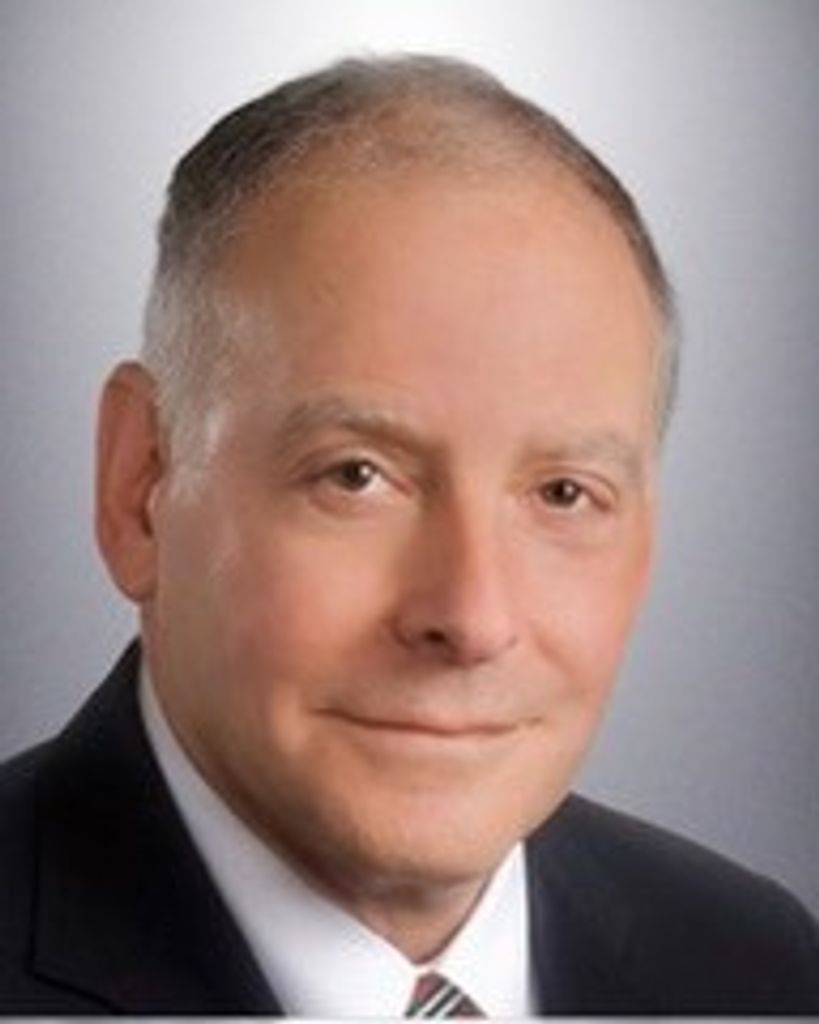


George A. Rubin
Jun 11, 1932 — Aug 14, 2026
George Allen Rubin, the son of Maurice and Laura Rubin and younger brother to Bob, was born on June 11, 1932, in Michigan City, Indiana. Growing up on Coolspring Avenue he became the embodiment of what his immigrant family could only have dreamed of when they escaped the pogroms and antisemitism of the Pale of Settlement in Russia.
George began his working life as an usher in his father’s movie theaters. In his official, military-inspired uniform, he used his flashlight to escort patrons to their seats and cleaned up after them when the “picture” was over. He learned early on that business was best on cloudy—but not rainy—days and concession sales were the cornerstone of the theater business.
Summer brought people from near and far to Michigan City. Locals seeking respite from their daily lives, Chicagoans escaping the oppressive heat of the city, and countless others made their annual pilgrimage to the beaches along Lake Michigan. It was here that George first showed his entrepreneurial spirit.
George obtained a cart and began selling ice cream, Creamsicles and other cool treats to beachgoers. However, when the city built its own concession stand, it simultaneously prohibited others from peddling on the beach. Rather than shut down his business, George obtained a small boat, placed his cooler in it, rowed along the shallow water just off the beach and continued his sales unabated.
When George left for Indiana University in Bloomington he ensured the continuation of his business by hiring his sister-in-law, Sharlene Rubin, to manage operations in his absence. While at IU, he became a proud member of Zeta Beta Tau (ZBT) and led the Marching Hundred band as the flag bearer.
Upon graduation with his bachelor’s degree in business, George planned to attend law school at Indiana University. He had given little thought to going elsewhere. However, at the urging of a friend’s father, a patron of his beachside concession business, he applied to Northwestern. Despite quotas limiting the admission of Jewish students, George was accepted and enrolled at Northwestern School of Law.
After completing his first year of law school, George put his legal education on hold to serve his country. From 1955 to 1957, he served as a lieutenant in the United States Air Force in San Antonio, Texas. Following his military service, George returned to Northwestern to complete his final two years of law school, earning his law degree in 1959.
After passing the Illinois and Indiana bar exams, George decided to move to Indianapolis and embark on what would become a remarkable legal career spanning more than half a century. He served as a law clerk to the Indiana Supreme Court and as a Deputy Attorney General of Indiana. He then entered private practice, becoming a partner at Bamberger & Feibleman and establishing himself as a respected authority in creditors’ rights.
Public service was another important part of George’s life. In 1968, he was elected to the Indiana State Senate, where he served through 1972. During his tenure he chaired the Senate Judiciary Committee and was a co-sponsor of Unigov, the landmark legislation that reorganized the government of Indianapolis and Marion County and helped shape the modern city. He also used his position to advocate for women’s rights, reproductive freedom and equal treatment under the law, causes that reflected his deeply held belief in equality for all.
George’s involvement in Indiana’s legal system continued long after his legislative service. He served on the Indiana Judicial Nominating Commission, thus participating in the process by which candidates for Indiana’s appellate courts were selected. In 1977, George founded Rubin & Levin with his colleague from Bamberger & Feibleman, Elliott Levin. George admired Elliott’s intelligence and recognized in him someone with whom he could build a successful law firm. Together, they built Rubin & Levin into one of the nation’s preeminent firms in creditors’ rights, bankruptcy and commercial law.
His professional life was distinguished not simply by longevity, but by a continuing determination to master his field. When national board certification in Creditors’ Rights Law became available, George studied for and obtained the certification, becoming one of the earliest attorneys nationally to earn the distinction.
George practiced law for 54 years before retiring in 2013. Over those decades, he earned the respect of judges, attorneys, clients and colleagues throughout the nation. He was known for his integrity, diligence and professionalism. On more than one occasion, those who had faced George on the other side of a case later sought him out as their own attorney, impressed not only by his skill and tenacity, but by the fairness and respect with which he had treated them as adversaries. That tenacity had been evident much earlier in the boy who, when prohibited from selling concessions on the beach, simply moved his business a few feet into Lake Michigan and continued his sales unabated.
Yet a recitation of George’s professional accomplishments tells only a part of his story. Despite holding himself to standards a perfectionist would fear, it was when he made what he considered to be a horrifying mistake that his life was irrevocably elevated.
One morning, as he was getting ready in his second-floor apartment, he answered an unexpected knock at his door. Standing there was a woman whose beauty left George awestruck. Unfortunately, she had not come to introduce herself. She lived in the apartment below and had come to inform him that water was leaking through her ceiling. George quickly discovered that he had completely forgotten about the water he had left running in his bathroom and his bathtub was now overflowing. Flummoxed by both his mistake and the woman standing at his door, George attempted to recover by inviting her in for a drink. She pointed out that it was ten o’clock in the morning.
The woman at the door was Jan Bernhardt Holtz. The overflowing bathtub George regarded as an appalling lapse would prove to be one of the greatest strokes of good fortune of his life.
George and Jan married and spent 52 years together, raising their two daughters, Kristine and Sara, and building a life rich in art, culture, and exploration. They traveled throughout the world, sharing an enthusiasm for new places, although not always for the same reasons. George could shop endlessly wherever they went, while Jan served as his more reasonable counterbalance. She insisted that there was more to experience than what could be found in the souks, shops and bazaars, leading him into museums, historic sites and cultural institutions he might otherwise have happily passed by. Still, wherever Jan led him in pursuit of culture, George inevitably managed to find the gift shop. Through their travels and their life together, Jan broadened George’s intellectual and cultural world, cultivating in him an appreciation for art, history and culture that became his own.
George’s tenacity extended well beyond his professional life. He began jogging in the 1950s, decades before running became fashionable, and made it a daily ritual wherever in the world he happened to be. Neither illness, oppressive heat nor snow deep enough to reach his knees provided sufficient reason to miss a run. Obstacles were not something George expected to disappear; he simply worked harder to overcome them. Throughout much of his career, he arrived home carrying two briefcases nearly the size of suitcases and continued working until midnight, only to rise the next morning, run, shower and begin again.
George brought that same determination to every aspect of his life. An early adopter of contact lenses in the 1950s, he once lost a lens while swimming in a cruise ship pool. Rather than accept its loss, he persuaded the crew to drain the pool so it could be recovered.
George was also color-blind, a limitation he addressed in characteristic fashion by embracing color with particular enthusiasm. He loved bright, vivid colors, even if he and those around him did not always agree on precisely what those colors were called.
George was a man who loved life. He was interested in people and in what was happening in the world around him. He was funny, opinionated and endlessly engaging. Even as his world became smaller, relationships remained at its center. His dry wit and gift for banter remained with him until the end, charming even those who met him for the first time in the final weeks of his life.
George died on the night of August 14, 2026, at the age of 94, cradled in loving arms with the dogs he loved nestled against him.
He was preceded in death by his beloved wife, Jan Bernhardt Holtz Rubin; his parents, Maurice and Laura (née Wilson) Rubin; his brother, Mandel Robert (Bob) Rubin; his nephew, Ken Rubin; and his furry son, Ruggles.
He is survived by his daughters, Kristine and Sara Beth; his niece, Francy Rubin; and Linda Rubin, wife of his late nephew, Ken.
Funeral services will be held at Aaron Ruben Nelson Mortuary, 11411 North Michigan Road, on Thursday, August 20th at 12 noon with burial to follow at Crown Hill Cemetery. To view the funeral live stream, CLICK HERE.
Memorial contributions may be made to the Jan B. Rubin Art Exhibition Fund at Newfields, 4000 Michigan Road, Indianapolis, IN 46208 or to the Jewish Federation of Greater Indianapolis.
George’s life stretched from Coolspring Avenue in Michigan City to Indiana University, Northwestern Law, the United States Air Force, the Indiana Statehouse and a legal career that helped shape institutions and lives.
George’s life embodied the American dream his immigrant family sought when they fled the pogroms and antisemitism of the Pale of Settlement. From the shtetls of Russia came a family whose descendants would find education, prosperity, professional success and a voice in the government of their adopted country. George’s life was a testament to the promise of an America in which the circumstances of one’s birth, ancestry or religion need not determine the boundaries of one’s future. It is a promise both extraordinary and fragile, and one each generation bears responsibility for preserving for the next.
Perhaps the best way to honor George’s life is to meet that responsibility as he did: work hard, act with integrity, treat others with dignity and, when given the opportunity to make a difference, choose to do what is right.
Service Schedule
Past Services
Funeral Service
Thursday, August 20, 2026
Starts at 12:00 pm (Eastern time)
Aaron-Ruben-Nelson Mortuary
Guestbook
Visits: 1190
This site is protected by reCAPTCHA and the
Google Privacy Policy and Terms of Service apply.
Service map data © OpenStreetMap contributors